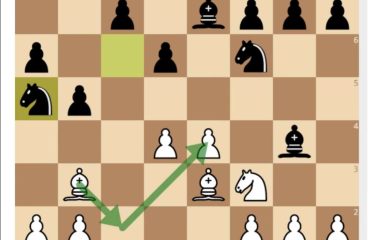
The queen’s power is undeniable in a game of chess. It’s a fact that one queen can capture the opposing queen, regardless of whether the latter is protected. When a queen is shielded by another piece, capturing her might come at a cost; the player risks losing their own queen in the process. In such scenarios, an exchange of queens transpires.
White’s Strategic Decision: Queen confronts Queen
In the illustrated scenario, White opts for a queen exchange through the move 1. QxQ. This decision isn’t just about exchanging pieces; it’s a calculated strategy. By making this move, White intends to strip Black of the privilege to castle. But this doesn’t spell disaster for Black. With the most formidable pieces, the queens, out of the picture, Black’s position only deteriorates marginally. In a queenless middlegame, the black king can adopt an unconventional yet safe position, perhaps on c7. The move c6 followed by Kc7 serves as an intriguing idea.
Black’s Counter and the Ensuing Consequences
Black is left with limited options. The immediate need is to capture the white queen. Retreating isn’t a wise choice, for White’s knight would swiftly capture the bishop, leaving Black at a disadvantage. Yet, the story doesn’t end with Black capturing the queen. In a twist, White refrains from an immediate recapture. Instead, White seizes the opportunity to capture Black’s bishop with a check. Only after this clever move does White reclaim the queen using the rook (RxQ), positioning themselves with an extra piece and a stronger chance to dominate.