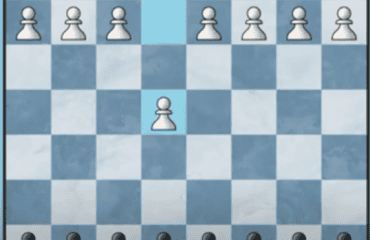
For ages, chess—a game that epitomizes strategy and wit—has held the intrigue of countless individuals with its sophisticated gameplay and relentless battlefield. Among its myriad of guidelines, the en passant rule frequently emerges as both an enigma and a masterstroke. This cryptic tactic permits a pawn to seize an adversary’s pawn that has recently advanced by two squares, as though it had merely progressed by one. At first glance, the en passant may seem simple, yet beneath its facade lies a treasure trove of strategic layers and historical relevance. In this exploration, we venture deep into the heart of the en passant rule, delving into its roots, mechanics, and the strategic nuances it introduces to chess. Whether you’re an adept player or a newcomer eager to deepen your understanding, accompany us on this captivating expedition into the realm of en passant, uncovering how this decree has molded the game cherished by royalty for generations.
A Profound Exploration of the En Passant Pawn Capture in Chess
In the vast world of chess, mastering intricate maneuvers such as the ‘en passant’ capture can significantly enhance one’s gameplay. Let’s embark on a comprehensive exploration of this fascinating pawn maneuver.
Unraveling the En Passant Capture:
- Historical Origins: The term ‘en passant’ finds its origins in the French language, where it means ‘in passing.’ This unique pawn maneuver was devised as a countermeasure against players’ tactical evasion of direct pawn confrontations, achieved by advancing their pawn two squares forward from its initial position;
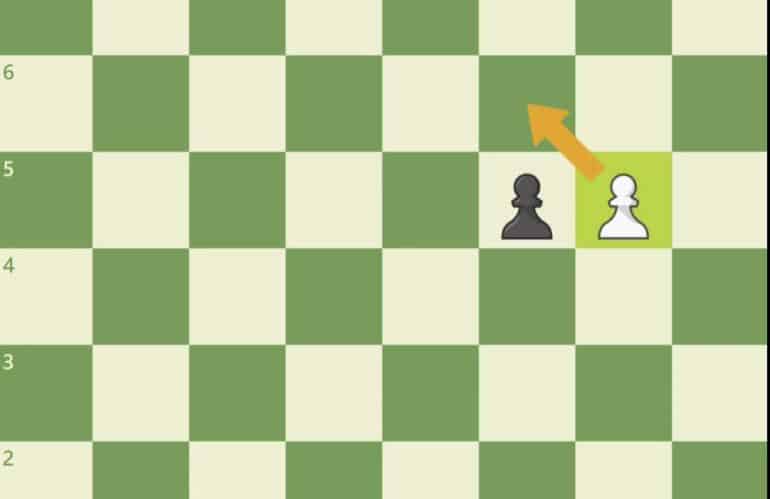
- Essential Conditions for En Passant: In order to execute an ‘en passant’ maneuver, a pawn must boldly advance two squares from its starting point. Crucially, this distinctive capture provides a fleeting opportunity – it must be promptly seized immediately following the double-square advancement and loses its validity as the game unfolds.
Visualizing with an Example:
- White’s Tactical Move: Picture a chessboard where the white contestant propels their f-pawn, stationed initially at f2, to f4, marking a notable double-square progression;
- Black’s Counterplay: This audacious maneuver bestows upon the black pawn, firmly stationed at e5, a unique opportunity. It can cleverly capture the white pawn positioned at f4 en passant, as if the white pawn had timidly moved only a single step forward to f3. This move serves as a direct response to white’s advancement of two squares;
- Progression in the Game: Following the black pawn’s en passant capture, the white king (or any other piece guarding the pawn) holds the opportunity to recapture the daring black pawn, depending on the strategic arrangement of the chess pieces on the board;
- Tactical Ramifications: Through such intricate maneuvers, the white contender could unintentionally engineer a scenario boasting a passed pawn on the queenside. Such a pawn, free from adversary pawns and granted an unimpeded trajectory towards promotion, morphs into a powerful asset during the endgame phase.
Significance of the En Passant Rule:
The en passant stipulation, albeit appearing complex, ensures fairness in gameplay. In its absence, chess enthusiasts could artfully sidestep looming pawn showdowns, thereby diluting the game’s strategic profundity. Absolute proficiency in this move, combined with grasping its far-reaching impacts, can pivot a game from a mere draw to a triumphant conquest in nail-biting matches. As with every facet of chess, consistent practice and real-game exposure invariably crystallize comprehension and optimize the deployment of this distinctive regulation.
Conclusion
The ‘en passant’ rule stands as a testament to the rich strategic layers embedded within the game of chess. It not only adds complexity but ensures fairness, preventing players from avoiding pawn engagements by taking shortcuts. While it might seem perplexing to beginners, grasping the nuances of this move can significantly elevate a player’s game. Like every chess maneuver, understanding and applying ‘en passant’ requires patience, practice, and a keen sense of strategy. It’s one of the many facets of chess that makes it an enduring and captivating game, always offering something new to learn and master. Whether one is a novice or a seasoned player, delving deeper into these rules can open up fresh strategic horizons, ensuring that the game remains eternally challenging and engaging.